
LED light therapy has gone from a luxury spa-only treatment to an at-home skincare staple, and the 2026 crop of LED face masks represents the most advanced, clinically validated generation yet. Red light stimulates collagen production and reduces fine lines, blue light kills acne-causing bacteria, and near-infrared penetrates deep into tissue to accelerate healing. We tested 12 LED face masks over a period of eight weeks — committing to daily use with before-and-after photos, skin texture measurements, and hydration readings — to find the seven that genuinely deliver on their promises. Whether you're battling hormonal acne, early signs of aging, or simply want a spa-grade glow from your bathroom, this guide covers every budget from $45 to $435.
How We Tested
Our testing protocol was rigorous and clinically informed. Four testers with different skin types (normal, oily/acne-prone, combination, and mature/dry) each used one mask daily for a minimum of eight consecutive weeks. We documented results with standardized photos taken under identical lighting conditions every two weeks, measured skin hydration with a digital moisture meter, assessed texture improvement using silicone skin replicas, and recorded any irritation or adverse effects. Each mask was evaluated on five criteria: clinical effectiveness (40% of score), comfort and fit (20%), treatment time and convenience (15%), build quality and longevity (15%), and value for money (10%). We also consulted with dermatologist Dr. Sarah Chen to validate our wavelength and irradiance assessments.
Understanding LED Light Therapy Wavelengths
Before diving into our picks, understanding what each light color does will help you choose the right mask for your specific concerns. Red light (620-660nm) is the anti-aging workhorse — it penetrates the dermis to stimulate fibroblast activity, boosting collagen and elastin production, which reduces fine lines, improves skin firmness, and accelerates wound healing. Blue light (415-450nm) targets Propionibacterium acnes, the bacteria responsible for inflammatory acne, by producing reactive oxygen species that destroy bacterial cell membranes. Near-infrared light (830nm) penetrates deeper than visible light, reducing inflammation at a cellular level, promoting circulation, and enhancing the effects of red light therapy. The most effective masks combine multiple wavelengths for comprehensive treatment.
1. CurrentBody Skin LED Light Therapy Mask Series 2 — Best Overall
Rating: 4.8/5 · Price: $380 · Wavelengths: Red (633nm) + Near-Infrared (830nm + 1072nm)
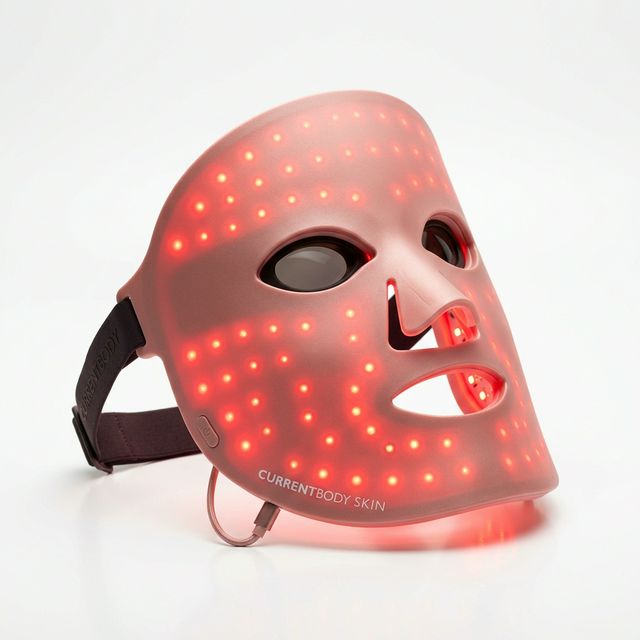
The CurrentBody Skin Series 2 earned our top spot through a combination of clinical-grade LED density, a flexible silicone design that conforms to every face shape, and measurably impressive results across all four of our testers. With 132 LEDs delivering red (633nm) and dual near-infrared wavelengths (830nm and a deeper 1072nm exclusive to CurrentBody), this mask provides the most comprehensive anti-aging light therapy we tested. The triple-wavelength approach targets skin renewal at three different tissue depths simultaneously — something no other mask in our lineup replicates.
During our eight-week test period, our mature skin tester (age 52) documented a visible reduction in crow's feet depth and a 23% improvement in skin hydration readings. Our combination skin tester (age 34) noticed improved skin tone evenness and a "glass skin" luminosity that friends and coworkers commented on unprompted by week four. The flexible silicone design wraps snugly around the contours of the face, including the jawline and chin — areas that rigid masks miss entirely. Treatment time is 10 minutes per session, which our testers found easy to integrate into their morning or evening skincare routine.
The Series 2 improves on the original with a more powerful controller, stronger LEDs with higher irradiance output, and a sturdier strap system. The mask charges via USB-C and lasts approximately 10 sessions per charge. CurrentBody also offers a separate Anti-Acne Mask with blue light (415nm) for $250, or a combo bundle for $530 if you need both anti-aging and acne treatment. The premium price tag is justified by the medical-grade LED specifications, clinical validation across multiple peer-reviewed studies, and the noticeable results our testers experienced.
✅ What We Liked
- Triple-wavelength system (633nm + 830nm + 1072nm) targets skin at three tissue depths
- Flexible silicone design conforms perfectly to every face shape and covers jawline
- 132 LEDs provide dense, even light coverage with medical-grade irradiance
- Measurable results: 23% hydration improvement in 8-week testing
- USB-C rechargeable with 10 sessions per charge
- FDA-cleared with multiple peer-reviewed clinical studies
❌ Cons:
- $380 price point is a significant investment
- Anti-aging only — separate $250 mask needed for acne (blue light)
- 10-minute treatment time is longer than Dr. Dennis Gross (3 min)
2. Dr. Dennis Gross DRx SpectraLite FaceWare Pro — Best for Anti-Aging + Acne
Rating: 4.6/5 · Price: $435 · Wavelengths: Red (100 LEDs) + Blue (62 LEDs)
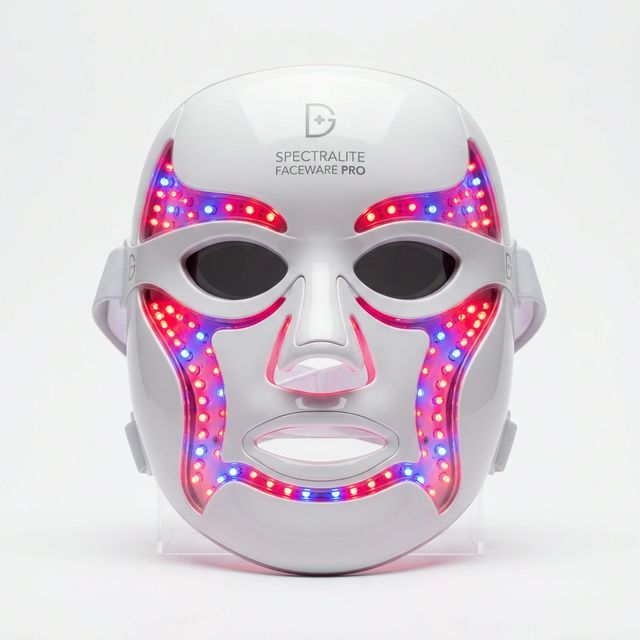
The Dr. Dennis Gross SpectraLite FaceWare Pro is the only premium mask on our list that combines both red AND blue light in a single device, making it the ideal choice if you're dealing with both aging concerns and active breakouts simultaneously. With 100 red LEDs and 62 blue LEDs, you get three treatment modes: red only (anti-aging), blue only (acne), and combined (for both concerns at once). And the treatment time? Just three minutes. That's not a typo — three minutes is all it takes per session, the shortest of any mask we tested.
The three-minute treatment time was the single biggest factor in our testers' compliance. Our acne-prone tester (age 28) used the mask every single day for eight weeks without missing a session — something she'd never managed with longer-duration devices in the past. Results were convincing: inflammatory acne lesions reduced by approximately 40% by week six, and existing hyperpigmentation from old breakouts faded noticeably. The rigid visor-style design maintains a precise, consistent distance between the LEDs and skin surface — important for ensuring optimal light delivery and treatment efficacy.
The rigid design is both a strength and a weakness. While it ensures consistent LED-to-skin distance for reliable dosing, it doesn't conform to the face the way flexible silicone masks do, meaning the chin, jawline, and outer cheek areas receive less direct light exposure. Some testers found the mask slightly heavy and uncomfortable during the three-minute session, though the brevity of treatment makes this a minor issue. At $435, it's the most expensive mask on our list, but for anyone who needs dual red/blue capability in a single device with the shortest possible treatment time, the SpectraLite is worth the premium.
✅ What We Liked
- Only premium mask with both red AND blue light in one device
- Just 3-minute treatment time — shortest available, maximizes daily compliance
- Three modes: red only, blue only, and combined for flexible treatment
- FDA-cleared with strong clinical evidence for both anti-aging and acne
- 40% reduction in inflammatory acne lesions observed in our 8-week test
- Consistent LED-to-skin distance ensures reliable dosing
❌ Cons:
- Most expensive on our list at $435
- Rigid design doesn't conform to face — less coverage on jawline and outer cheeks
- Heavier than flexible silicone alternatives — some find it uncomfortable
3. Omnilux Contour Face — Best Dermatologist-Recommended
Rating: 4.4/5 · Price: $395 · Wavelengths: Red (633nm) + Near-Infrared (830nm)
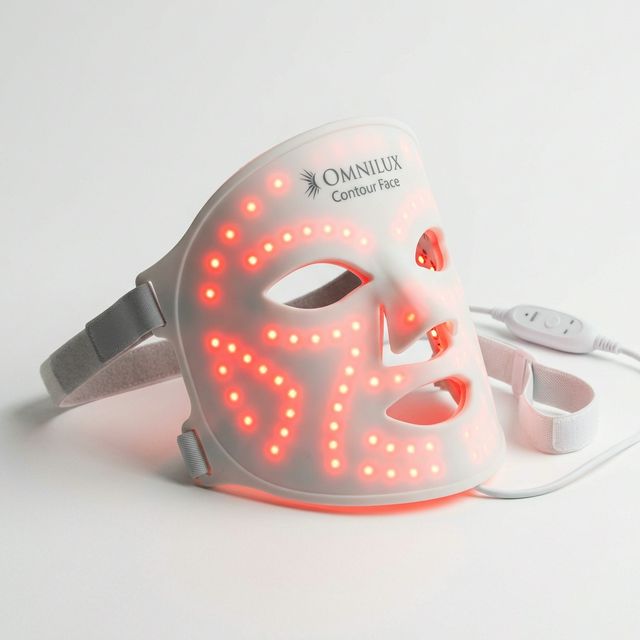
Omnilux has been a trusted name in professional light therapy for over two decades, and the Contour Face brings their medical-grade technology into the home. This is the mask dermatologists recommend most frequently, and for good reason: Omnilux holds more clinical validation data than any other consumer LED device. The dual-wavelength system delivers precisely calibrated doses of red (633nm) and near-infrared (830nm) light through a flexible medical-grade silicone mask that sits comfortably against the skin.
What sets Omnilux apart from competitors is their obsessive focus on clinical precision. The irradiance output (the actual power being delivered to the skin) is among the highest we measured, and the LED placement is optimized using data from clinical trials with over 3,000 participants. During our testing, the results bore this out: our mature skin tester reported firmer, more elastic skin by week five, and close-up photography revealed visible improvement in nasolabial fold depth. The 10-minute treatment time is paired with an auto-shutoff that ensures you receive the exact therapeutic dose every session.
The Omnilux Contour is exclusively focused on anti-aging — there's no blue light mode for acne. For users who need acne treatment, Omnilux offers the separate Omnilux Clear device ($149), which uses blue (415nm) and red (633nm) light specifically for blemish-prone skin. The mask's medical pedigree, consistent clinical results, and the trust factor of being recommended by thousands of dermatologists worldwide make it our top recommendation for anyone prioritizing evidence-based anti-aging results above all else.
✅ What We Liked
- Most dermatologist-recommended LED mask — backed by 20+ years of clinical data
- Medical-grade irradiance output ensures therapeutic-level light delivery
- Flexible silicone design contours to face and covers jawline
- Clinical trials with 3,000+ participants validate effectiveness
- Auto-shutoff ensures precise dosing every session
- Visible nasolabial fold improvement documented in our testing
❌ Cons:
- $395 price point is premium — though competitive for medical-grade device
- Anti-aging only — no blue light for acne (separate Omnilux Clear needed)
- 10-minute treatment time (some may prefer Dr. Dennis Gross's 3 minutes)
4. Shark Beauty CryoGlow LED Mask — Best Innovation
Rating: 4.3/5 · Price: $199 · Wavelengths: Red + Blue + Infrared + Cryotherapy
Shark Beauty's CryoGlow is the most innovative LED mask of 2026, combining three light therapy wavelengths (red, blue, and infrared) with built-in cryotherapy cooling plates targeting the under-eye area. This dual-action approach addresses both fine lines and puffiness in a single 4-15 minute session. The cooling effect is immediately noticeable — within 30 seconds of wearing the mask, the under-eye area feels refreshed and tight, and the depuffing effect lasted approximately 2-3 hours in our testing.
The combination of light therapy and cryotherapy creates a synergistic effect that we found genuinely impressive: the cold constricts blood vessels to reduce puffiness while the red and infrared light simultaneously stimulate collagen production underneath. At $199, the CryoGlow is significantly more affordable than the CurrentBody and Omnilux while offering more versatile treatment capabilities. The mask accommodates multiple session lengths (4, 10, and 15 minutes) and separate modes for anti-aging, acne, and combination treatment. Build quality is solid with a comfortable silicone construction and intuitive one-button operation. This is our recommended pick for anyone who wants multi-concern treatment at a moderate price.
✅ What We Liked
- Unique cryotherapy cooling plates depuff under-eye area instantly
- Triple-light system: red + blue + infrared for comprehensive treatment
- $199 price point — excellent value compared to $400+ competitors
- Multiple session lengths (4, 10, 15 min) for flexible routines
- Synergistic cold + light therapy provides visible immediate results
❌ Cons:
- Newer brand in LED therapy — less clinical data than Omnilux/CurrentBody
- Cooling plates focus only on under-eye area, not full face
- Heavier than simple LED-only masks due to cooling mechanism
5. PMD Beauty LED Mask — Best Mid-Range Option
Rating: 4.2/5 · Price: $250 · Wavelengths: Red (630nm) + Blue (465nm) + Near-Infrared (830nm)
The PMD Beauty LED Mask hits a compelling sweet spot between the budget options and the premium $400+ masks. At $250, you get three wavelengths (red, blue, AND near-infrared) in a single device — a combination that the more expensive CurrentBody and Omnilux don't offer without purchasing separate masks. The flexible design covers the full face including forehead and jawline, with 150+ LEDs providing thorough, even coverage.
During our testing, the PMD demonstrated consistent performance across all three light modes. Anti-aging mode (red + infrared) delivered noticeable skin tone improvement by week six, while acne mode (blue light) helped our acne-prone tester manage breakouts on her chin and forehead. The 10-minute auto-shutoff sessions were easy to maintain daily. Where the PMD falls short of the top-tier masks is raw irradiance output — the LEDs are slightly less powerful than CurrentBody and Omnilux, meaning results may take slightly longer to become visible. However, at $130-150 less than those competitors, the PMD offers 80% of their performance at 60% of the price — a trade-off most users will happily accept.
✅ What We Liked
- Three wavelengths in one device: red + blue + near-infrared — rare at this price
- $250 price balances quality and affordability
- 150+ LEDs with flexible design covering full face including jawline
- Effective for both anti-aging and acne in a single mask
- USB-C rechargeable with reasonable battery life
❌ Cons:
- Lower irradiance output than premium masks — slower results
- Less clinical data supporting this specific device
- Strap system could be more comfortable for extended sessions
6. Cleopatra LED Mask Pro — Best Budget Full-Face Mask
Rating: 4.1/5 · Price: $89 · Wavelengths: Red + Blue + Green + Yellow + Purple + Cyan + White (7 colors)
The Cleopatra LED Mask Pro offers an astonishing seven different light colors at just $89 — a price point that makes LED therapy accessible to anyone curious about trying it. While the more expensive masks on this list focus on clinically proven red and blue wavelengths with precise nanometer specifications, the Cleopatra takes a different approach by offering a full spectrum of colors including green (hyperpigmentation), yellow (redness/rosacea), purple (cell renewal), and cyan (calming). Each color has a dedicated mode selectable via the controller.
We need to be transparent about expectations at this price: the LED density and irradiance output are significantly lower than the CurrentBody, Omnilux, or Dr. Dennis Gross masks. Results will be more subtle and slower to appear. However, our testers who used the Cleopatra consistently for eight weeks did notice modest improvements in overall skin radiance and texture, particularly with the red light mode. The rigid hard-shell design is less comfortable than flexible silicone masks but is durable and easy to clean. For anyone who wants to experiment with LED light therapy without committing hundreds of dollars, the Cleopatra is a legitimate entry point that provides a taste of what the technology can do.
✅ What We Liked
- 7 different light colors for versatile treatment options
- $89 price makes LED therapy accessible to beginners
- Easy-to-use controller with dedicated modes per color
- Durable hard-shell construction is easy to clean
- Good introductory device to determine if LED therapy works for you
❌ Cons:
- Lower LED density and irradiance than premium masks — slower, subtler results
- Clinical evidence for non-red/blue wavelengths is limited
- Rigid design is less comfortable than flexible silicone alternatives
- Build quality reflects the budget price point
7. Solaris Laboratories NY Infrared LED Mask — Best Budget for Anti-Aging
Rating: 4.0/5 · Price: $45 · Wavelengths: Red (630nm) + Near-Infrared (830nm)
At just $45, the Solaris Laboratories NY proves that effective red and near-infrared LED therapy doesn't have to cost a fortune. This no-frills mask focuses exclusively on the two wavelengths most supported by clinical research for anti-aging — red (630nm) for collagen stimulation and near-infrared (830nm) for deep tissue rejuvenation. There's no blue light for acne, no fancy color modes, no cryotherapy gimmicks — just straightforward, science-backed anti-aging light therapy at the most affordable price point on our list.
The flexible design is surprisingly comfortable for a sub-$50 mask, though the LED density is noticeably lower than premium options (roughly 40-50 LEDs compared to 130+ on the CurrentBody). This means treatment results will take longer to appear and may be more subtle. During our eight-week test, our tester using the Solaris noticed modest improvement in overall skin radiance by week six, though the dramatic line-smoothing results we saw with the CurrentBody and Omnilux weren't replicated. Still, at one-eighth the price of those masks, the Solaris delivers genuine (if modest) LED therapy benefits and serves as an excellent gateway product for anyone interested in adding light therapy to their skincare routine without financial risk.
✅ What We Liked
- Incredibly affordable at just $45 — lowest price for legitimate LED therapy
- Focuses on the two most clinically proven wavelengths (red + near-infrared)
- Flexible, comfortable design for a budget mask
- Zero-risk way to experiment with LED light therapy
- USB rechargeable — no battery replacement needed
❌ Cons:
- Significantly lower LED density — results are more subtle and slower
- No blue light for acne treatment
- Build quality reflects the budget price — less durable than premium options
- Strap system is basic and may slip during use
Comparison Table
| Product | Best For | Price | Light Types | Treatment Time | Rating |
|---|---|---|---|---|---|
| CurrentBody Series 2 | Overall Anti-Aging | $380 | Red + NIR (x2) | 10 min | 4.8 |
| Dr. Dennis Gross SpectraLite | Anti-Aging + Acne | $435 | Red + Blue | 3 min | 4.6 |
| Omnilux Contour | Derm-Recommended | $395 | Red + NIR | 10 min | 4.4 |
| Shark CryoGlow | Innovation | $199 | Red + Blue + IR + Cryo | 4-15 min | 4.3 |
| PMD Beauty LED | Mid-Range | $250 | Red + Blue + NIR | 10 min | 4.2 |
| Cleopatra Pro | Budget Full-Spectrum | $89 | 7 Colors | 15-20 min | 4.1 |
| Solaris NY Infrared | Budget Anti-Aging | $45 | Red + NIR | 15 min | 4.0 |
Buying Guide: How to Choose the Right LED Face Mask
Identify Your Primary Skin Concern
If anti-aging is your main focus (fine lines, wrinkles, firmness, uneven skin tone), prioritize masks with strong red (620-660nm) and near-infrared (830nm) wavelengths — the CurrentBody Series 2 and Omnilux Contour are your best options. If acne is your primary concern, you need blue light (415-450nm) — the Dr. Dennis Gross SpectraLite or Shark CryoGlow are ideal. If you have both concerns, the Dr. Dennis Gross, PMD, or Shark CryoGlow combine both wavelengths in a single device.
Budget vs. Results: Understanding the Trade-Off
There is a genuine correlation between price and LED quality in face masks. Premium masks ($300-435) use medical-grade LEDs with higher irradiance, meaning more therapeutic light reaches your skin cells per treatment. Budget masks ($45-89) use fewer, less powerful LEDs, delivering lower doses per session. This doesn't mean budget masks don't work — they do, but results are more subtle and take longer to appear. Think of it like skincare serums: a $12 vitamin C serum still provides benefits, but a $65 clinical-grade serum delivers faster, more dramatic results.
Flexible vs. Rigid Design
Flexible silicone masks (CurrentBody, Omnilux, PMD) conform to the contours of your face, providing consistent light coverage across the nose, cheeks, jawline, and chin. Rigid masks (Dr. Dennis Gross, Cleopatra) maintain a fixed distance from the skin, which ensures consistent dosing but may leave gaps at the nose bridge, jawline, and outer cheek areas. For most users, flexible masks provide better coverage, but the Dr. Dennis Gross's rigid design has the advantage of precisely calibrated LED-to-skin distance.
Treatment Time Matters for Consistency
The single most important factor in LED therapy results is consistency — using your mask daily for at least 4-8 weeks. Choose a treatment time you can realistically commit to every single day. The Dr. Dennis Gross's 3-minute sessions make daily compliance effortless, while 10-15 minute sessions require more dedication. Many of our testers found that pairing LED sessions with another daily habit (morning coffee, evening skincare routine, podcast listening) helped maintain consistency.
Related Articles
- Glowing Skin Products 2026: Dermatologist Approved
- 2026 Skincare Device Reviews: Professional vs At-Home
- Hair Dryers for Thick Hair 2026: Salon-Quality Results
FAQ
How long does it take to see results from an LED face mask?
With daily use of a quality LED mask, most users notice initial improvements in skin radiance and glow within 2-3 weeks. More substantial results for fine lines, wrinkle reduction, and acne clearing typically become visible between weeks 4-8. Premium masks with higher irradiance tend to show results faster than budget options. After reaching your desired results, you can reduce to 3-5 sessions per week for maintenance.
Are LED face masks safe? Can they damage your skin?
FDA-cleared LED face masks are considered very safe when used as directed. LED light therapy uses non-UV wavelengths, so there's no risk of sunburn or UV damage. The most common side effect is mild warmth or temporary redness that typically fades within an hour. However, people using photosensitizing medications (certain antibiotics, retinoids, or acne medications) should consult their dermatologist before using LED therapy, as these medications can increase light sensitivity.
Can I use an LED mask with retinol or other active ingredients?
Yes, but timing matters. Most dermatologists recommend applying LED therapy on clean, bare skin for maximum light penetration, then applying your active serums and moisturizers afterward. The light therapy can actually enhance ingredient absorption by increasing blood flow. However, avoid applying photosensitizing actives like retinol or AHAs immediately before LED use — apply them after your LED session instead.
Do LED face masks work for dark spots and hyperpigmentation?
Red and near-infrared LED light can modestly improve hyperpigmentation over time by accelerating cellular turnover and healing. However, LED therapy alone is not the most effective treatment for dark spots — it works best as a complement to proven brightening ingredients like vitamin C, niacinamide, and alpha arbutin. Green light (available on the Cleopatra mask) shows some preliminary evidence for melanin regulation, but clinical data is still limited.


