Driving at night presents a unique set of challenges, from reduced visibility to unexpected hazards. While a standard dash cam offers peace of mind during the day, its effectiveness can dramatically diminish once the sun sets. This is where a dash cam with superior night vision capabilities becomes not just a luxury, but a critical safety and security tool. Imagine capturing crystal-clear footage of an incident on a dimly lit street, or identifying a license plate number that would otherwise be lost in the shadows. For many drivers, finding the best dash cam night vision is paramount.
In this comprehensive buying guide for 2026, we'll dive deep into what makes a dash cam excel in low-light conditions. We'll explore the essential technologies, key features to look for, and provide recommendations across different budget ranges. Our goal is to equip you with the knowledge to choose a dash cam that truly delivers when it matters most, ensuring your drives are recorded with clarity, day or night.
What to Look For in a Dash Cam for Superior Night Vision
Not all dash cams are created equal, especially when it comes to performance after dark. Understanding the specific technologies and features that contribute to excellent night vision is crucial for making an informed decision. Here are the key criteria to consider:
Advanced Image Sensor Technology
The heart of any good camera, including a dash cam, is its image sensor. For night vision, you want a sensor that can gather as much light as possible and process it efficiently. The industry standard for superior low-light performance is the Sony STARVIS sensor. Dash cams equipped with STARVIS technology utilize back-illuminated pixel technology, which dramatically increases light sensitivity, allowing them to capture detailed, vibrant images even in near-dark conditions. Other high-quality CMOS sensors can also perform well, but STARVIS is often a benchmark for the best dash cam night vision.
When researching, look for mentions of "Sony STARVIS" or similar proprietary low-light sensors from reputable brands. This technology makes a significant difference in reducing noise and improving clarity when light is scarce, turning what would be a dark, grainy mess into usable, forensic-quality video.
Lens Aperture (f-stop)
The aperture of a lens dictates how much light can pass through to the sensor. It's measured in f-numbers (e.g., f/1.8, f/2.0, f/2.8). A lower f-number indicates a wider aperture, meaning more light can enter the lens. For exceptional night vision, you want a dash cam with a wide aperture, ideally f/1.8 or even f/1.6. A wider aperture allows the sensor to capture more ambient light from streetlights, headlights, and even moonlight, resulting in brighter and clearer night recordings.
Conversely, a higher f-number (e.g., f/2.8 or f/3.5) means a narrower aperture, letting in less light and generally leading to darker, noisier night footage. Always prioritize a dash cam with the lowest f-number you can find within your budget if night vision is a top priority.
HDR (High Dynamic Range) & WDR (Wide Dynamic Range)
Driving at night often involves encountering extreme variations in light – bright headlights approaching, dark unlit stretches, and sudden glares from streetlights. HDR and WDR technologies are designed to handle these contrasts. They work by capturing multiple exposures (one bright, one dark) and combining them into a single, balanced image. This prevents overexposure in bright areas and underexposure in dark areas, ensuring that details are preserved across the entire frame.
Without HDR or WDR, a dash cam might struggle to capture both a bright license plate and the dark road ahead simultaneously, often blowing out the highlights or losing details in the shadows. For truly effective night vision, especially in urban environments with varying light sources, HDR or WDR is an indispensable feature.
Resolution and Frame Rate
While sensor quality and aperture are paramount, resolution and frame rate also play a vital role in the overall quality of night vision footage. A higher resolution, such as 1440p (2K) or 2160p (4K), means more pixels are captured, leading to greater detail. This can be crucial for identifying license plates, faces, or other small but important details in low-light conditions.
Equally important is the frame rate, measured in frames per second (fps). A frame rate of 30fps is standard, but 60fps offers smoother video and can make it easier to discern fast-moving objects, which is particularly beneficial when reviewing footage of an incident. While 4K at 30fps is excellent, some users might prefer 1440p or 1080p at 60fps for smoother motion capture, especially if their dash cam struggles to maintain a consistent 4K 30fps in low light.
Infrared (IR) Capability for Interior Cameras
If you're looking for a dual-channel dash cam (front and interior) or a standalone interior camera, infrared (IR) night vision is non-negotiable for the cabin camera. Unlike the front-facing camera which relies on ambient light, an interior camera needs to see inside a potentially pitch-black car. IR LEDs emit invisible light that illuminates the cabin without distracting the driver, allowing the camera to record clear black-and-white footage of passengers or intruders.
This feature is especially important for ride-share drivers (Uber, Lyft) or anyone who wants to monitor their vehicle's interior overnight. Always check for dedicated IR LEDs on interior-facing cameras if this is a requirement for your specific needs for the best dash cam night vision setup.
Advanced Image Processing and Noise Reduction
Beyond the raw hardware, a dash cam's internal software and processor play a significant role in refining the image quality, especially in low light. Advanced image processing algorithms can analyze the raw sensor data, reduce digital noise (the graininess often seen in dark videos), and enhance clarity and sharpness. Some manufacturers employ proprietary algorithms specifically tuned for their sensors to optimize night performance.
Look for dash cams that boast powerful processors, as these can handle complex computations in real-time to deliver cleaner, more detailed night recordings. While harder to quantify from specifications alone, reviews and sample footage are excellent indicators of a dash cam's processing prowess.
Parking Mode with Low-Light Sensitivity
A dash cam's utility extends beyond active driving. Parking mode allows your dash cam to continue monitoring your vehicle when it's parked, providing crucial security against hit-and-runs, vandalism, or theft. For parking mode to be effective at night, the dash cam needs to retain its excellent low-light capabilities.
Ensure that the parking mode you choose (e.g., buffered recording, time-lapse, or motion detection) is fully functional and performs well in dark conditions. Many dash cams use a specific low-power mode for parking, and it's essential that this mode doesn't compromise the night vision quality. This often requires a hardwire kit to provide continuous power to the dash cam.
Best Dash Cam Night Vision — Budget Recommendations (2026)
Finding the right balance between features and cost can be tricky. Here are our top recommendations for the best dash cam night vision across different budget ranges, each offering excellent performance for its price point:
Low Budget (Under $150)
Even on a tighter budget, you can find dash cams that offer surprisingly good night vision, often leveraging a good sensor and a wide aperture. These models typically focus on front-facing recording and essential features.
Vantrue N1 Pro Mini Dash Cam
The Vantrue N1 Pro Mini is an excellent choice for drivers seeking reliable night vision without breaking the bank. It boasts a Sony STARVIS sensor and an f/1.8 aperture lens, which together deliver impressive clarity in low-light conditions for its price segment. While it's a compact, single-channel dash cam, its 1080p resolution at 30fps is more than sufficient for capturing critical details at night. Users consistently praise its ability to pick up license plates and road details even on poorly lit roads. It's a great entry point for those prioritizing night vision on a budget.
Mid Budget ($150 - $300)
In this range, you start to see more advanced features like higher resolutions, improved HDR/WDR, and often more robust build quality. Many dual-channel options also become available here.
VIOFO A119 V3 Dash Cam
The VIOFO A119 V3 is a perennial favorite in the dash cam community, largely due to its exceptional image quality, especially at night, for its price. It features a Sony STARVIS IMX335 sensor and a wide f/1.6 aperture lens, allowing it to capture stunning 1440p (2K) footage at 30fps. The combination of a top-tier sensor and a very wide aperture results in bright, detailed, and clear night recordings with minimal noise. Its WDR technology also handles challenging light transitions effectively, making it one of the top contenders for the best dash cam night vision in its class. It's a single-channel camera, but its front-facing performance is hard to beat.
High Budget ($300+)
At the premium end, you can expect top-of-the-line sensors, 4K resolution, advanced processing, and often multi-channel (front and rear, or front, rear, and interior) recording with excellent night vision across all channels.
BlackVue DR900X-2CH Plus Dash Cam
For those seeking the ultimate in dash cam performance, particularly for night vision, the BlackVue DR900X-2CH Plus is an outstanding choice. This premium dual-channel system features a 4K UHD front camera and a Full HD rear camera, both utilizing advanced Sony STARVIS sensors. The front camera's 8-megapixel sensor and f/2.8 lens (optimized for 4K clarity) work in conjunction with BlackVue's proprietary image processing to deliver incredibly detailed and clear night footage. While the aperture isn't as wide as some 2K cams, the sheer resolution and sensor quality compensate, providing excellent clarity for identifying distant objects and license plates. The rear camera also benefits from STARVIS for solid night performance. With its cloud connectivity, parking mode, and robust build, it represents the pinnacle of dash cam technology for comprehensive security, day and night.
Common Mistakes When Buying a Dash Cam for Night Vision
Even with all the right information, it's easy to make missteps when selecting a dash cam. Avoiding these common mistakes will help ensure you get the best dash cam night vision for your needs:
1. Prioritizing Resolution Over Sensor Quality and Aperture
Many buyers are drawn to "4K" claims, assuming higher resolution automatically means better night vision. While 4K is great, a dash cam with a superior image sensor (like Sony STARVIS) and a wide aperture (low f-number) at 1080p or 1440p will often outperform a 4K dash cam with a lesser sensor and narrower aperture in low light. Always prioritize the sensor and lens aperture first for night vision performance.
2. Ignoring WDR/HDR Capabilities
As discussed, varying light conditions at night can severely impact footage clarity. Overlooking WDR or HDR means your dash cam might struggle with glare from headlights or streetlights, leading to washed-out areas or lost detail in shadows. Always confirm the presence of these dynamic range technologies.
3. Forgetting About Interior Night Vision for Dual Cams
If you're buying a dual-channel dash cam that includes an interior camera, ensure the interior camera has dedicated infrared (IR) LEDs. Without them, the interior footage at night will be completely black and useless. The front camera's night vision doesn't apply to the cabin.
4. Not Considering Parking Mode's Night Performance
A dash cam is meant to protect your car 24/7. If you plan to use parking mode, verify that its night vision capabilities are robust in this mode. Some cheaper dash cams might significantly reduce quality or even disable certain features to save power in parking mode, rendering night surveillance ineffective.
5. Poor Placement and Dirty Windshield
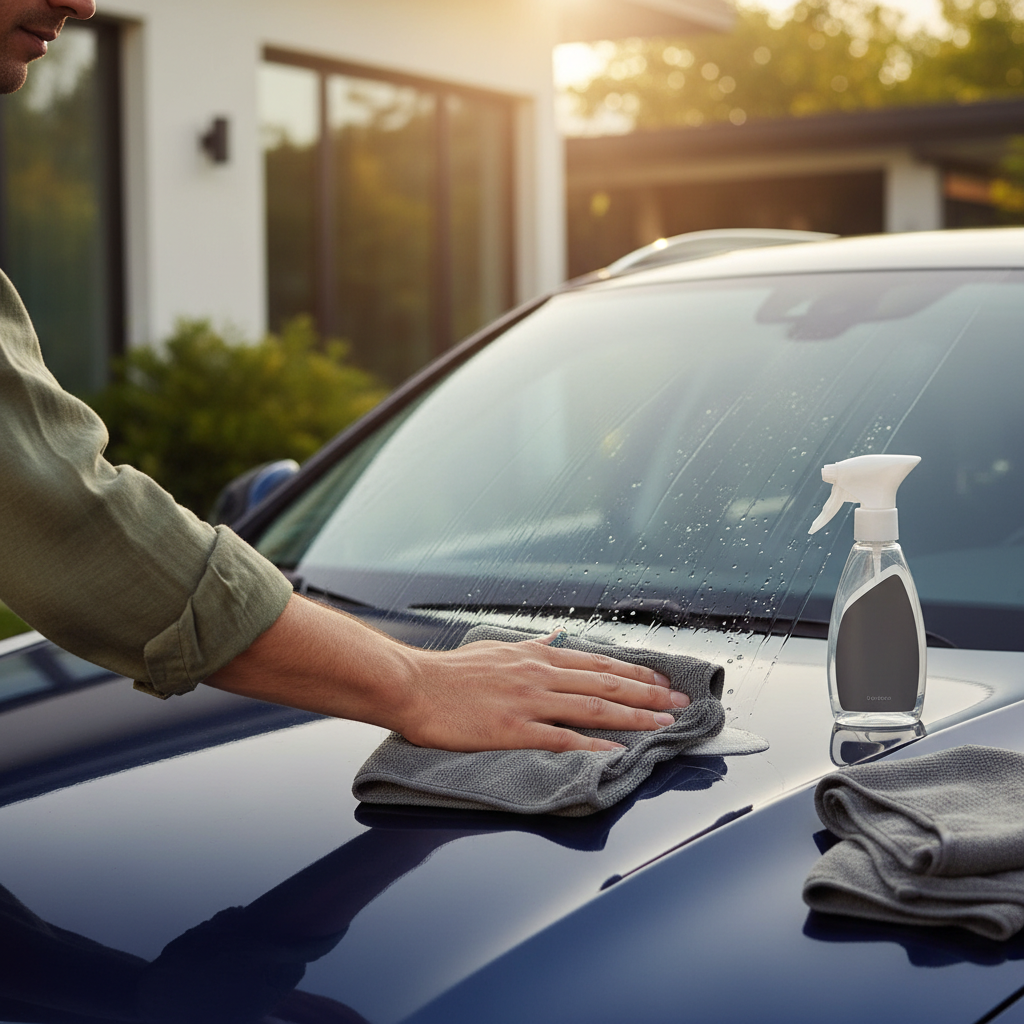
Even the best dash cam night vision can be hindered by improper installation. Ensure your dash cam is placed optimally, with a clear view of the road and not obstructed by wipers or tint strips. Crucially, a dirty or smudged windshield will severely degrade night vision quality, creating halos and blurring light sources. Regularly clean the area of your windshield directly in front of the dash cam lens.
6. Overlooking Power Requirements for Parking Mode
If you want parking mode to work overnight, your dash cam will need a continuous power supply, typically through a hardwire kit. Relying solely on the car's 12V socket will only power the camera when the ignition is on, leaving your vehicle unprotected at night when parked.
Frequently Asked Questions About Dash Cam Night Vision
Q: What specifically makes a dash cam's night vision good?
A: The primary factors are a high-quality image sensor (like Sony STARVIS), a wide lens aperture (low f-number like f/1.8), and dynamic range technologies (HDR/WDR). These elements work together to capture more light, reduce noise, and balance contrast in low-light conditions.
Q: Is IR (Infrared) night vision necessary for all dash cams?
A: No, IR night vision is primarily necessary for interior-facing cameras in dual or triple-channel dash cams. It allows the camera to see inside a completely dark cabin. For front-facing cameras, ambient light from streetlights and headlights, combined with advanced sensors and apertures, is usually sufficient.
Q: Can a dash cam record clearly in complete darkness?
A: A front-facing dash cam without any ambient light (e.g., in a completely unlit rural area with no moon) will struggle significantly, even with the best technology. They rely on amplifying existing light. Interior cameras with IR LEDs, however, can record clearly in complete darkness within the cabin.
Q: How important is 4K resolution for night vision?
A: While 4K offers more detail, it's not the single most important factor for night vision. A 1440p dash cam with a superior sensor and wider aperture can often produce clearer, brighter night footage than a 4K dash cam with an inferior sensor. However, a 4K dash cam with a top-tier sensor and good processing will provide the most detail possible.
Q: Does parking mode work well at night?
A: Yes, if your dash cam has good night vision capabilities and is properly hardwired for continuous power, its parking mode should work effectively at night. Look for dash cams that specifically mention enhanced night vision in parking mode or utilize low-power buffered recording.
Q: How often should I clean my dash cam lens and windshield?
A: You should regularly clean the dash cam lens and the small section of your windshield directly in front of the lens. Dust, smudges, and dirt can significantly impair night vision quality by scattering light and creating glare. A quick wipe with a microfiber cloth every few weeks or whenever you clean your car's interior is recommended.
Conclusion
Investing in a dash cam with excellent night vision is one of the smartest decisions you can make for your on-road safety and vehicle security. As our roads become busier and incidents remain a constant possibility, having clear, reliable footage – regardless of the time of day – provides invaluable peace of mind and crucial evidence when you need it most.
By understanding the critical role of advanced image sensors, wide apertures, HDR/WDR technology, and appropriate resolution, you're now well-equipped to navigate the market. Whether you opt for a budget-friendly option that punches above its weight, a feature-rich mid-range model, or a premium system that offers comprehensive 24/7 protection, prioritizing these night vision specific features will lead you to the best dash cam night vision for your driving lifestyle. Drive safely, and drive protected.