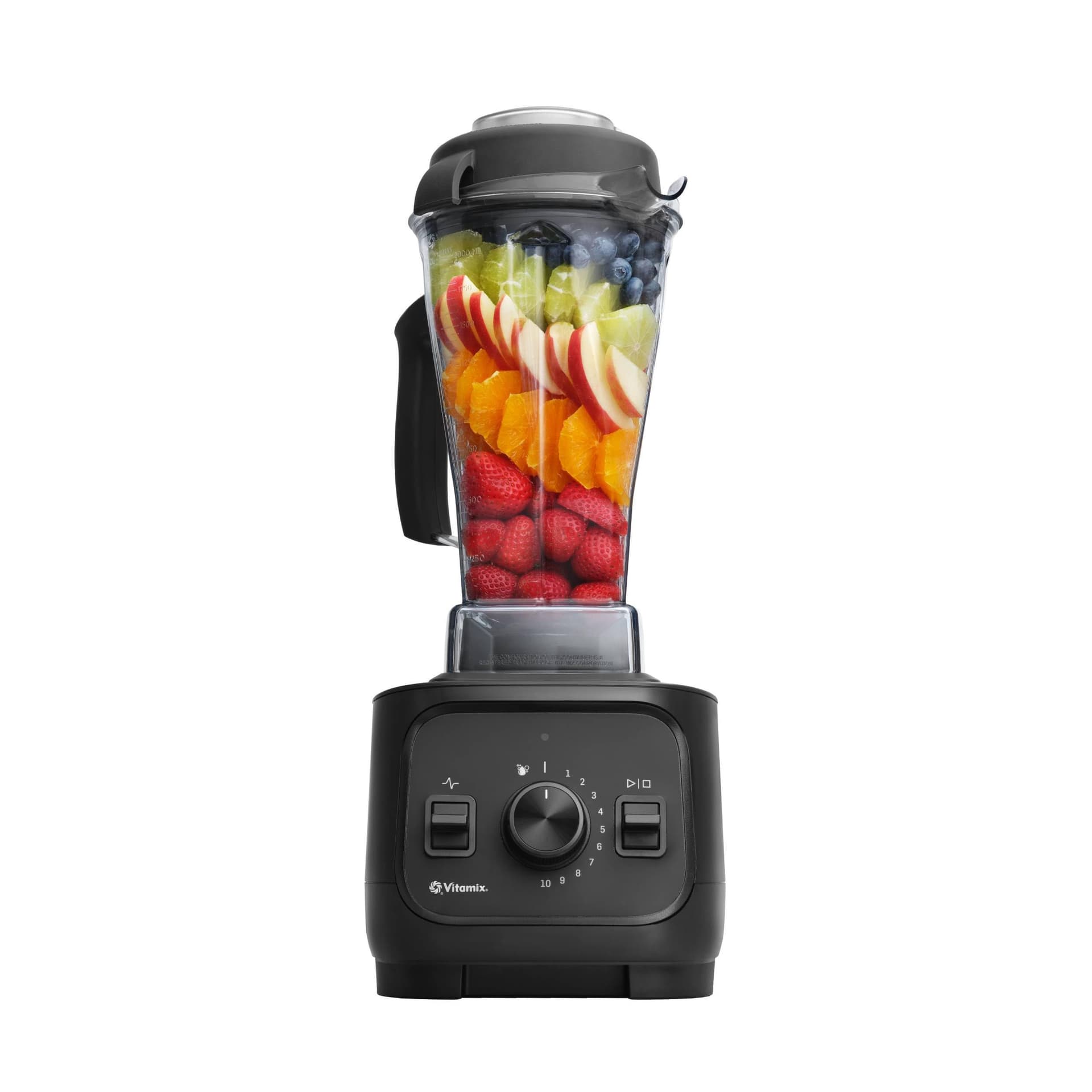
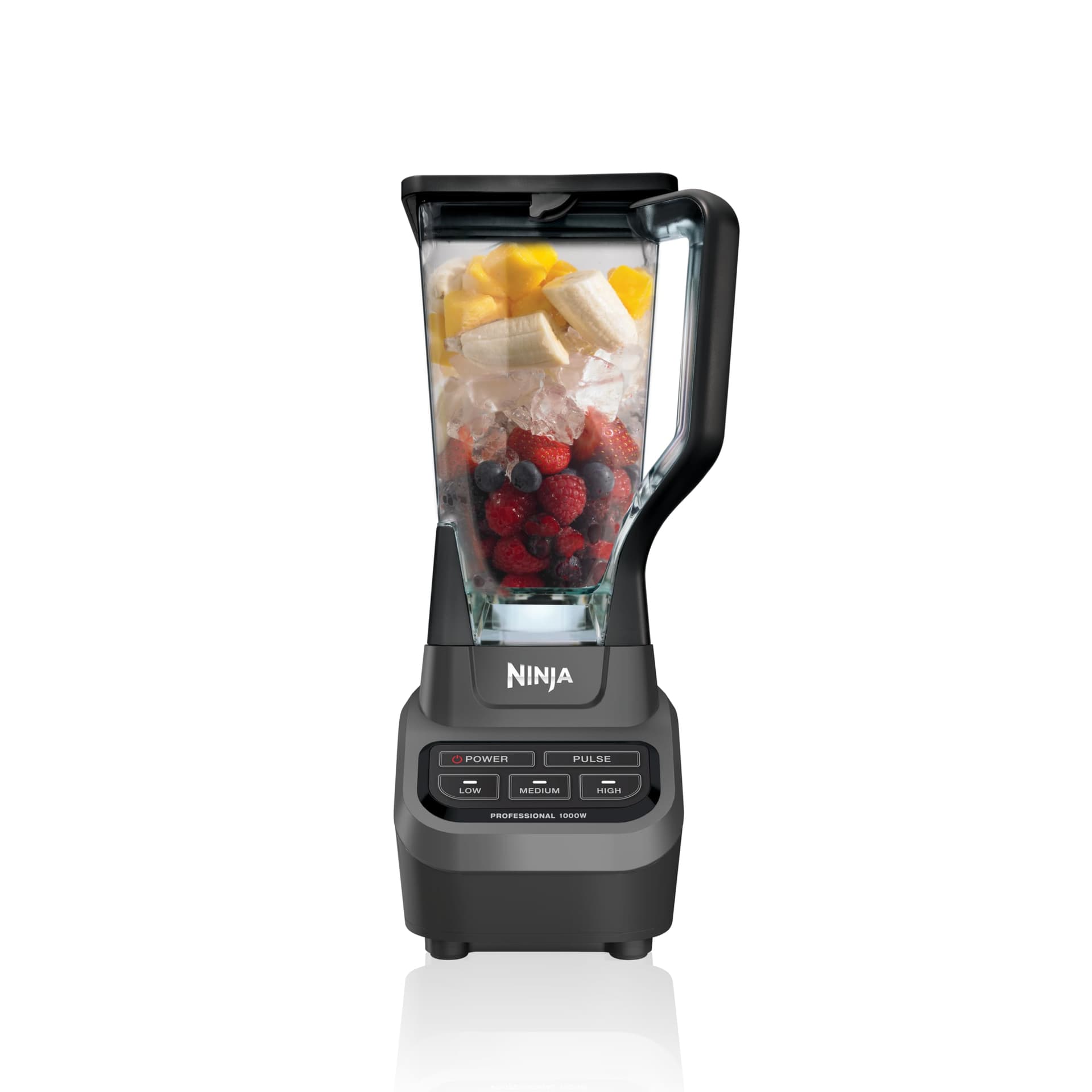
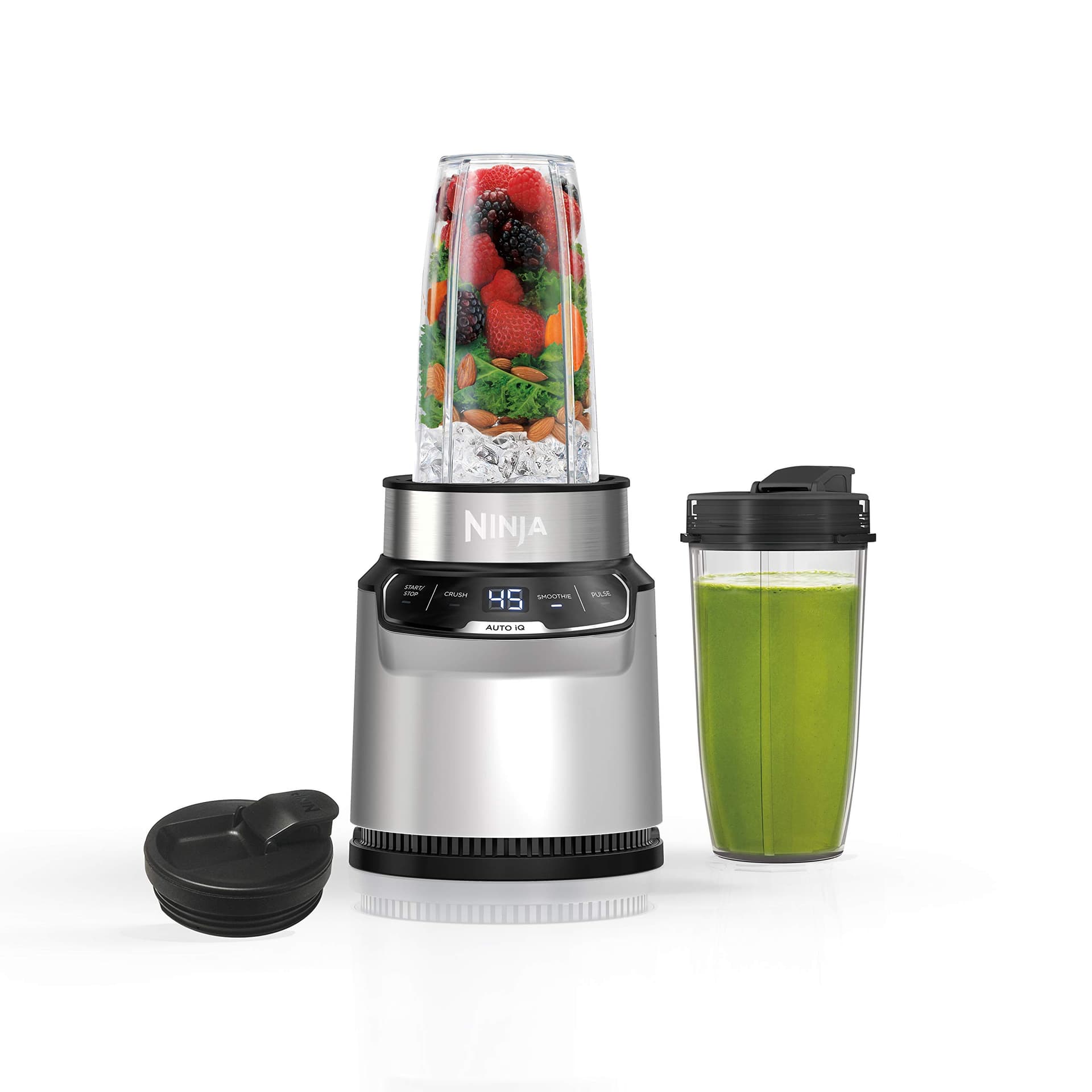
The premium machine in this comparison carries the lowest rating of the three. Not by much, but it is there in the data: 4.3 out of 5 for the VX1 Professional-Grade Blender against 4.6 for both of the cheaper Ninja-style units. And it costs about five times what the entry model costs. That is the whole Vitamix vs Ninja blender argument compressed into two numbers, and it is worth sitting with before anyone talks about horsepower.
| Criteria | VX1 Professional-Grade, 64 oz. | Professional Blender, 1000W, 72 oz (BL610) | Nutri-Blender Pro, Auto iQ (BN401) | Winner |
|---|---|---|---|---|
| Best for | Daily heavy use, hot soup, nut butters, whole-food purees | Family batches, frozen drinks, ice by the pitcher | One or two people, single-serve smoothies, small kitchens | BN401 for most buyers |
| Key strength | Sustained-load motor and jar built to be rebuilt, not replaced | Largest pitcher here at 72 oz with a stacked blade assembly | Highest listed wattage of the three in the smallest body | VX1 on engineering, BN401 on fit |
| Rating | 4.3 / 5 | 4.6 / 5 | 4.6 / 5 | Tie: BL610 and BN401 |
| Verdict | Earns its premium only if you blend hard, daily | The right full-size pitcher blender for a household | The value pick and the one most people should start with | BN401 |
Quick answer, no hedging. If you make one or two drinks a day and drink them from the vessel you blended them in, buy the Nutri-Blender Pro and spend the difference on better produce. If you feed a family, make frozen cocktails for six, or blend soup bases by the quart, the 72 oz Professional Blender is the correct shape of machine and the cheaper one will annoy you within a month.
The VX1 is for a narrower buyer than its marketing suggests: someone who runs a blender under load every single day, wants hot soup made by friction rather than a stove, and expects to keep the machine for a decade. That buyer exists. Most people reading a Vitamix vs Ninja blender comparison are not that buyer.
How we compared these
Nobody at PikVex has owned or run these three blenders. There is no wear time, no decibel meter, no ice-crush stopwatch. What we have is the listing data (capacity, motor rating, blade and program descriptions), the star ratings, Prime eligibility, and relative price standing across the three.
That last point needs an honest flag, because it changes how much weight any of this deserves. Our data shows star ratings for all three but no published review counts. A 4.6 backed by 80,000 ratings and a 4.6 backed by 200 are different facts wearing the same number, and we cannot tell you which of those we are looking at here. So the ratings get used directionally, not decisively. Where the conclusion rests on a rating alone, we say so.
The rest is inference from specification, which for blenders is unusually productive, because blender performance is mostly determined by three things you can read off a spec sheet: motor duty rating, jar geometry, and blade position relative to the vortex.
Motor ratings, and why 1100 beats 1000 on paper only
Here is the first trap. The Nutri-Blender Pro is listed at 1100PW. Those two letters are doing enormous work. PW means peak watts, which is the unloaded spike a motor can draw for an instant, typically measured at startup. The 72 oz Professional Blender is listed at 1000W with no qualifier in the data we have, which could mean the same peak figure stated less carefully.
Sustained wattage under load is the number that actually predicts whether a machine stalls halfway through a frozen banana, and none of these three listings publish it. Neither does most of the category. Treat wattage on a blender box the way you treat peak power on a cheap car amplifier.
The VX1 does not lead with a wattage claim at all, and in this category that is usually a sign of confidence rather than omission. Professional-grade blenders are specified around continuous duty: motor cooling, thermal protection, and the ability to run at full speed for minutes rather than seconds. That is the genuine engineering difference in a Vitamix vs Ninja blender matchup, and it is also the thing you will never notice if your longest blend is 45 seconds of protein shake.
Winner: VX1, on duty rating rather than on numbers. The 1100 peak watts on the smallest machine here is the biggest figure in the comparison and the least meaningful one.
Jar geometry: 72 oz, 64 oz, and two 24 oz cups
The Professional Blender's 72 oz pitcher is the largest vessel here, but pitcher capacity is not working capacity. Full-size blender jars are rated to the brim, while the safe blending fill line sits well below it, because a spinning load climbs the walls. Expect meaningfully less usable volume than 72 oz for anything liquid. Neither listing here publishes the max liquid line, which is a routine gap in the category and an irritating one.
The VX1's 64 oz jar is smaller on paper and probably better shaped. Tall, narrow jars force ingredients back into the blade path instead of letting them ride out to the walls, which is why professional-grade containers are the shape they are and why they usually come with a tamper. Our data does not list a tamper for the VX1, so do not assume one is included.
One warning that applies to both big machines and appears in no listing: full-size blenders with 64 to 72 oz jars commonly stand 17 to 20 inches tall assembled, which is taller than the clearance under a standard 18 inch upper cabinet. Measure before you buy, because neither listing here gives an assembled height.
The Nutri-Blender Pro's two 24 oz cups are a different proposition entirely. You blend and drink from the same vessel, which removes the worst chore in smoothie-making: washing a pitcher. Two cups means two people, or one person and one already in the dishwasher.
Winner: split. BL610 for volume, BN401 for the shape of a real weekday morning, VX1 for blend quality per pass.
Blades, and the phrase "Total Crushing Technology"
Total Crushing Technology is a brand name for a tall stacked blade assembly that lifts out of the pitcher as one piece. It is not a technology. It is a blade tower, and it works: stacking blades at multiple heights means ice gets hit on the way down instead of orbiting above a single blade at the bottom. For pulverizing frozen fruit into snow, it is genuinely effective.
It also has two costs that show up repeatedly in complaints about this whole blade-tower design across the category. The assembly is sharp and freestanding, so washing it is a hand-in-the-sink hazard, and the tower occupies vertical space inside the jar, which reduces usable volume and makes the pitcher awkward to pour from without the blades in the way.
The Nutri-Blender Pro uses a small cup-mounted blade driven from below, which is the standard personal-blender arrangement. It produces a tight, fast vortex in a narrow cup and handles frozen fruit with liquid very well. Without enough liquid, it packs the load against the walls and spins at nothing. That is physics, not a defect, and it is the single most common source of frustration with every personal blender ever sold.
The VX1 gives us the least blade detail of the three, which is a genuine annoyance: the premium listing discloses less than the budget one. One feature line, 64 oz container, and that is it.
Winner: BL610 for ice specifically. The blade tower is the right tool for that job.
Controls: presets versus a dial
Auto iQ on the BN401 means timed preset programs that pulse and pause on a schedule. For a repeated task (the same smoothie, every morning) presets are quietly excellent, because they remove the decision and produce a consistent result. For anything improvised, they are a cage. You press a button and wait out a program that may be longer or shorter than what the contents need.
Neither the BL610 nor the VX1 listing mentions preset programs in our data, so assume manual control on both. Manual is better for cooks and worse for everyone in a hurry before work. That is not a spec problem, it is a temperament question.
Winner: BN401 for habit, manual machines for cooking. If you already batch and prep on a schedule, the logic is the same one that makes our Instant Pot meal prep pick the boring model rather than the clever one.
Value, and the five-times problem
The VX1 costs roughly five times the Nutri-Blender Pro. The Professional Blender sits just above the entry model, about 1.2 times, which makes it the most interesting price position in the group: for a small step up from the cheapest option you get four times the vessel capacity.
That 1.2 multiple is the real story in this comparison and almost nobody frames it that way. The gap between the two Ninja-style machines is narrow enough that the decision is purely about batch size and cleanup preference, not about money. The gap to the VX1 is wide enough that it has to be justified by hours of use, not by blend quality on a Tuesday.
All three are Prime eligible and none are currently discounted, so shipping and timing are not tiebreakers here.
Winner: BL610 on pure value per ounce of capacity. BN401 on value per dollar spent.
Full specs comparison
| Spec | VX1 Professional-Grade | Professional Blender BL610 | Nutri-Blender Pro BN401 |
|---|---|---|---|
| Vessel | 64 oz container | 72 oz pitcher | Two 24 oz cups |
| Motor rating as listed | Not stated | 1000W | 1100 peak watts |
| Blade system | Not specified in listing | Stacked blade tower (Total Crushing) | Cup-mounted base blade |
| Program control | Manual (no presets listed) | Manual (no presets listed) | Auto iQ timed presets |
| Blend-and-go | No | No | Yes, drink from the cup |
| Rating | 4.3 / 5 | 4.6 / 5 | 4.6 / 5 |
| Published review count in our data | Not available | Not available | Not available |
| Prime | Yes | Yes | Yes |
| Price standing | Premium, about 5x the entry model | About 1.2x the entry model | Entry model, cheapest of three |
Who should buy the VX1 Professional-Grade Blender
Buy this if the blender is a daily tool rather than an occasional appliance. Nut butters, hot soup blended to steaming by friction alone, frozen desserts, whole carrots taken down to something drinkable: these are the loads that break consumer motors and that a professional-grade duty rating exists to survive.
The counterpoint is that the listing gives us very little and the rating is the weakest here at 4.3. Two possibilities, and we cannot tell them apart from the data: either the rating base is small and unsettled, or expectations run higher at this price and buyers judge accordingly. Both are common at the premium end.
Pros: built for sustained load rather than bursts; 64 oz jar geometry that keeps food in the blade path; the only one of the three plausibly serviceable years from now.
Cons: lowest rating in the group at 4.3; the thinnest listing of the three, with one disclosed feature; roughly five times the entry model's cost; no assembled height published, and machines this size often defeat an 18 inch cabinet clearance; no preset programs listed, so you are driving it manually.
Who should buy the Professional Blender, 1000W, 72 oz (BL610)
This is the household machine. Margaritas for a table, smoothies for four children in one go, a pitcher of soup base, crushed ice on demand. The blade tower plus the biggest vessel in this comparison is a specific combination aimed squarely at frozen volume, and it is the only one of the three that handles a party.
Against that: it is a big object on a counter, the sharp lift-out blade assembly makes washing a careful operation, and 72 oz is a brim figure rather than a fill figure. If you are a single-serve smoothie drinker, you will wash a pitcher every morning for capacity you never use.
Pros: largest capacity here; blade tower is genuinely good at ice; 4.6 rating; sits only slightly above the entry model in price, which makes the capacity jump cheap.
Cons: pitcher-only, so no blend-and-go cup; the freestanding blade stack is awkward and hazardous to hand wash; usable volume is well under the stated 72 oz; no timed presets listed, unlike the cheaper BN401.
Who should buy the Nutri-Blender Pro with Auto iQ (BN401)
The cheapest machine here is the one we would recommend to the largest number of people, and that is the counterintuitive part of this whole comparison. Two 24 oz cups, timed presets, the highest listed wattage figure in the group, a 4.6 rating, and the smallest footprint. For one or two people making the same drink most mornings, the more expensive machines mostly add washing up.
It is also the natural pairing for anyone already working through the mixes in our protein powder comparison, where the whole point is a fast repeatable single serving.
Pros: blend and drink from the same cup; Auto iQ presets make the daily result consistent; entry price in this group; the only one of the three that fits a small apartment counter without argument.
Cons: 24 oz caps you at one drink per cycle, so no family batches and no soup; needs enough liquid or the load packs against the cup walls and the blade spins at nothing; the 1100 peak watt figure is marketing, not sustained output; cup gaskets and threads are the usual wear point on personal blenders and they are consumables.
Common questions
Is the premium machine five times better? No. Nothing is five times better than a 4.6-rated blender. What the premium buys is duty cycle and longevity, which is a real thing you may or may not need. If your blender runs 40 seconds a day, the cheaper machines will likely outlive your interest in smoothies.
Does 72 oz beat 64 oz? On paper. In practice a narrower 64 oz jar can blend a thick load better than a wider 72 oz one, because jar shape controls whether ingredients return to the blade. Capacity and blending ability are separate specs that people routinely conflate.
Which is quieter? We cannot say. No decibel figures appear in any of these listings and we have not run them. As a category rule, high-power blenders are loud, and the professional-grade ones are often the loudest because they spin fastest under load.
Can the personal blender crush ice? With liquid, yes. Dry ice-only loads are where small cup blenders struggle most, because there is nothing to carry the solids into the blade. This is the recurring complaint pattern for the entire personal-blender format, not a fault specific to this model.
Why does the 4.3 rating on the premium pick matter if there are no counts? Because it is the only rating signal available, and it points the wrong way for the most expensive product. We would not discard it, but we would not treat a 0.3 star gap as settled without knowing how many ratings sit behind each number.
The verdict
Pick the Nutri-Blender Pro if you are one or two people, your blender lives on a small counter, and your blend is roughly the same every day. It is the value pick in this Vitamix vs Ninja blender lineup and it is genuinely good enough, which is the part premium buyers hate to hear.
Pick the 72 oz Professional Blender if there are three or more of you, or if ice by the pitcher is the actual job. The step up from the entry model in price is small and the step up in capacity is not.
Pick the VX1 only if you blend hard and daily, want hot soup out of a blender, and intend to own the same machine in ten years. That buyer will be happy. Everyone else is paying about five times the entry price for headroom they will not reach, and the 4.3 rating is the one piece of evidence here that the market has noticed.