Twenty-five thousand and thirty-seven ratings. That is the Iron Gym doorway bar's review count, and the next closest product in this comparison set has 3,985. The one after that, 2,645. The newest of the four has 220. When one product in a category has accumulated nearly ten times the feedback of its nearest rival and has still not slipped below 4.5 out of 5, the maths is doing something no marketing copy can fake.
So here is the verdict before the argument: if you want a doorway-mounted bar and you do not want to think about it any further, this is the one, and it is also the cheapest of the four. That combination almost never happens. Usually the volume leader charges a premium for being the safe choice.
What follows is a look at what the specs actually commit Iron Gym to, what 25,037 ratings can and cannot tell you, and the specific buyer who should walk right past this thing. Nobody on our team has hung from one. Everything below comes from the published listings, the ratings distribution across all four products, and what the feature data supports.
What it is
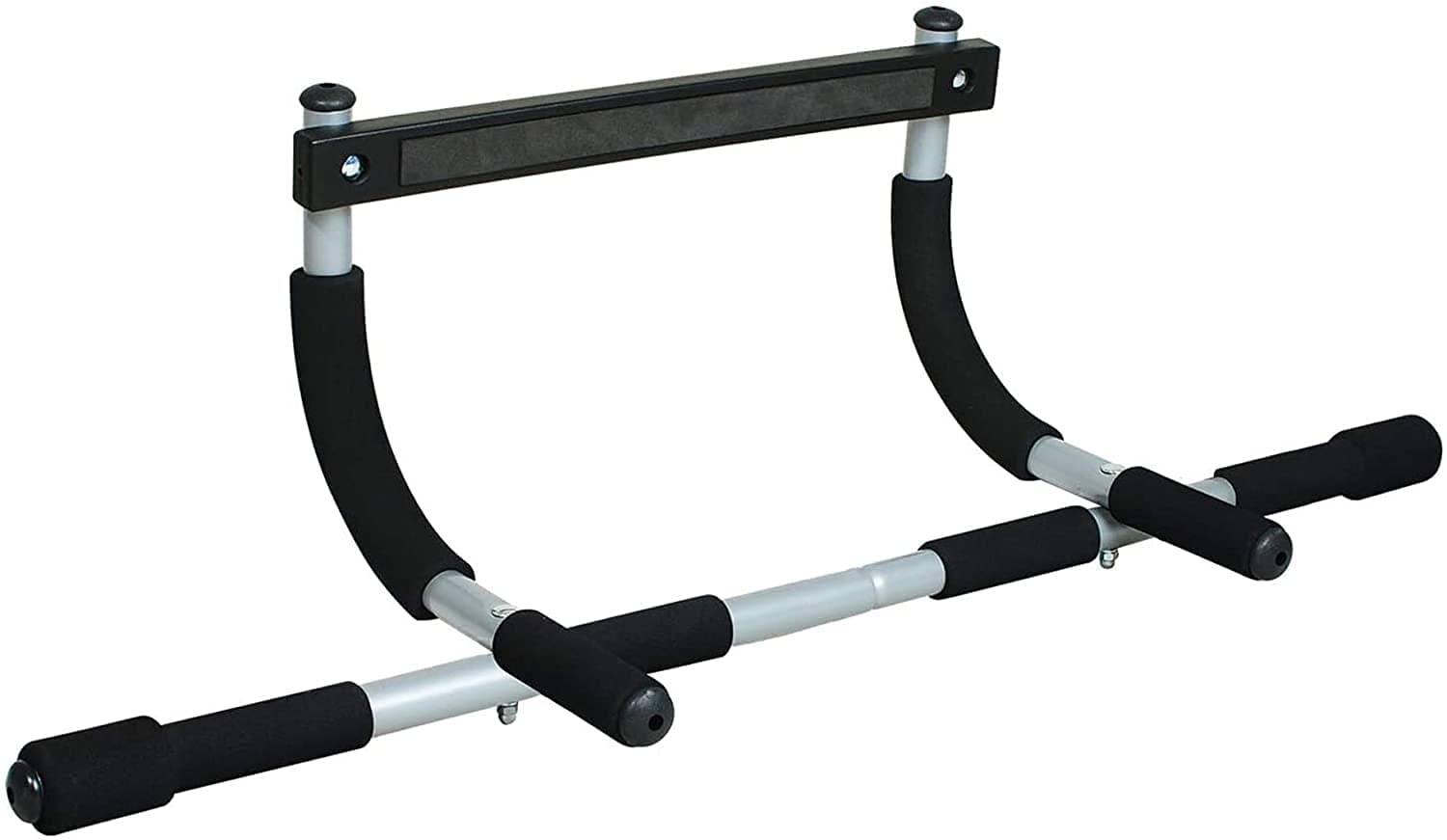
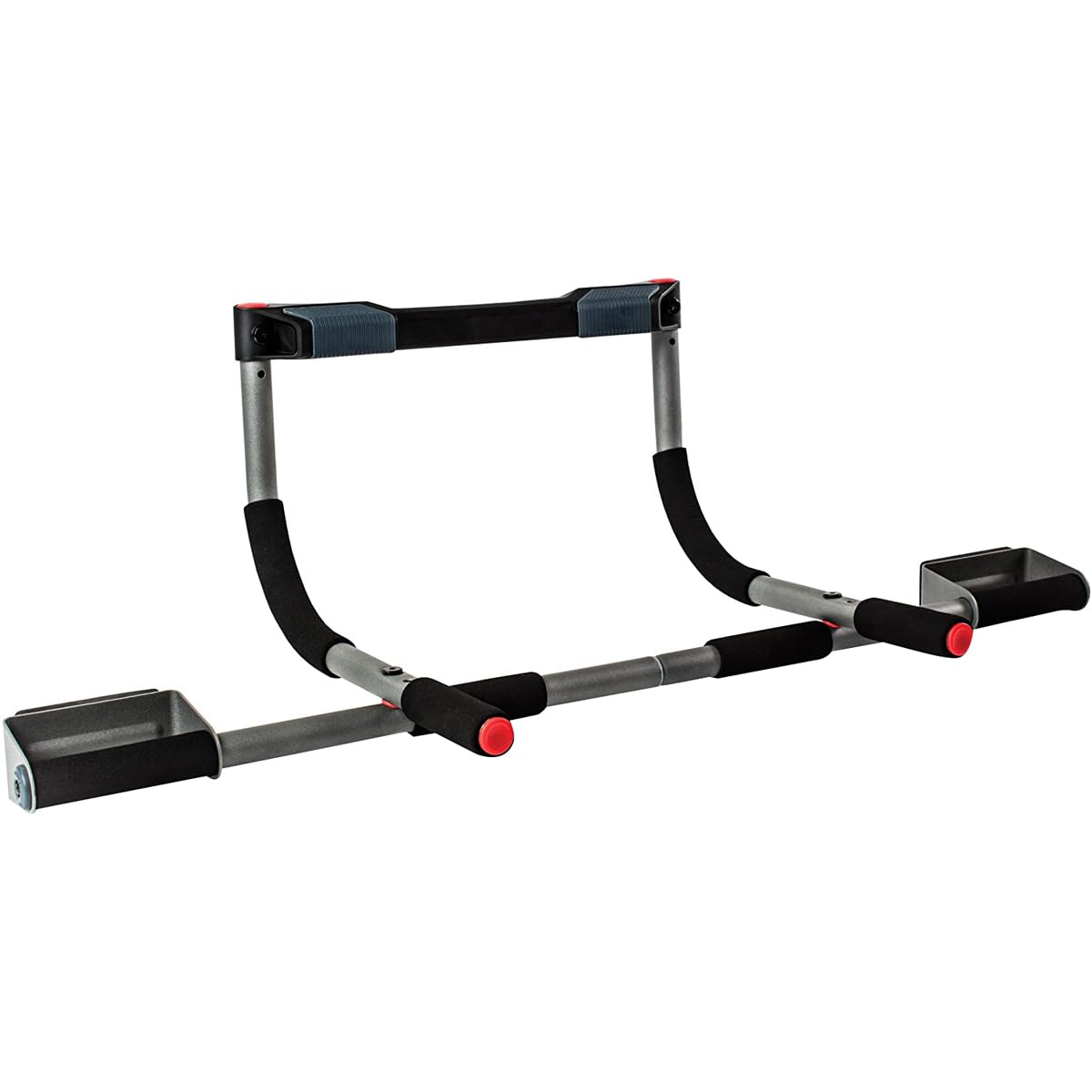
A steel bar that wedges into a door frame using leverage rather than screws. The long arm sits against the wall above the door on the far side, your bodyweight pushes it into the wall, and friction plus geometry keeps the whole thing where it is. No drilling, no anchors, no landlord conversation.
The listing names three things: adjustable width locking, no-screws door frame mounting, and multi-position grips for what it calls total upper body work. The adjustable width matters more than it sounds. Interior door frames in American housing stock vary enough that a fixed-width bar is a coin flip, and the ones sold at a single width generate a predictable stream of one-star reviews from people whose door is 34 inches instead of 32.
It also comes off the frame and sits on the floor for push-up and dip positions. That is the "total upper body" part of the name, and it is the part most buyers never use.
How we picked it
We compared four pull up bars for home use on the only evidence available in the listings: rating, review volume, listed features, and relative price standing. No hands-on work, no load testing, no measurements of our own. Where the data does not reach, we say so, and in this category it does not reach far: none of the four listings publishes a weight rating in the data we have, and that is the single number a buyer most wants.
What tipped it was the ratio between review count and score. Three of the four products sit at exactly 4.5. The fourth, ProsourceFit, sits at 4.6 from 220 ratings. A 4.6 from 220 and a 4.5 from 25,037 are not comparable claims. The first could move to 4.3 in a month if a bad production batch ships. The second is statistically frozen. You would need thousands of one-star reviews to move it a tenth of a point.
None of these four appear in the Fitness top thirty we record daily, and our recorded window is only three days (September 6 to 8, 2026), so no trend can be read from it. Worth saying plainly: doorway pull up bars are not the volume sellers of the fitness category. Water bottles and resistance bands are. This is a niche within a niche, and Iron Gym dominates it.
What the adjustable width actually buys you
Fit is the whole product. A doorway bar that does not seat correctly in your frame is not a compromised bar, it is a hazard, and the adjustable width lock is the feature that separates Iron Gym from the fixed-width designs.
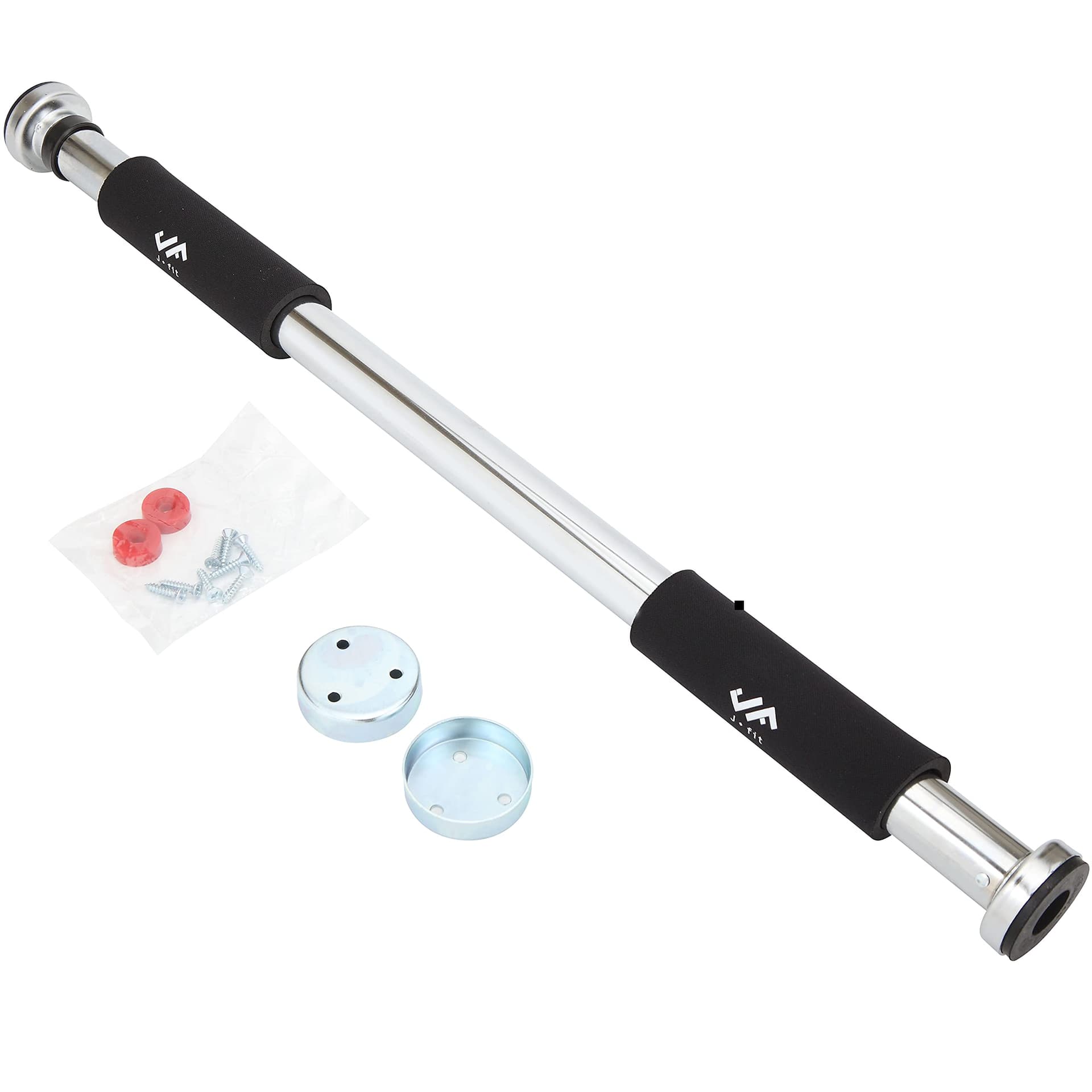
The JFIT alternative publishes a 40-inch figure in its product name, which is a length spec rather than an adjustment range, and its listing in our data lists no features at all. That is not damning, but it tells you something about how much confidence each brand has in what it built. Iron Gym leads with the adjustment. JFIT leads with grip comfort.
For anyone in a rental, in a dorm, or moving in the next year, the no-screws mount is the entire reason to buy this category instead of a wall-mounted bar. Wall mounts are stronger and quieter. They also leave four holes and a security deposit conversation.
The multi-position grip claim, examined

Iron Gym markets narrow, wide and neutral hand positions off a single frame. That is real geometry, not a claim, and it is the sort of thing you can verify from the product image: the bar has forward-projecting handles as well as the straight span.
But be honest about the neutral grip on a doorway bar. Any grip that sits forward of the door frame changes the load vector on the mount, pushing outward rather than straight down. That is physics, not opinion, and it is why the recurring complaint across cheap doorway bars is not bar failure but frame damage. The bar holds. The trim does not.
This is the one place we think the marketing outruns the design. "Total upper body workout bar" is a phrase doing more work in the product name than in the steel.
What 25,037 ratings support, and what they do not
A 4.5 average at this volume means roughly this: the product does the main thing reliably for the large majority of buyers, and the failure modes are consistent enough that Iron Gym has not fixed them in the many years this thing has been on sale. Both of those are worth knowing.
Review volume that large also means the product has survived multiple manufacturing revisions, currency shifts and supplier changes without the score collapsing. Compare ProsourceFit's 220 ratings. Its 4.6 is technically the highest score in the group, and we would still not lean on it. It is a young sample from what is likely a single production run.
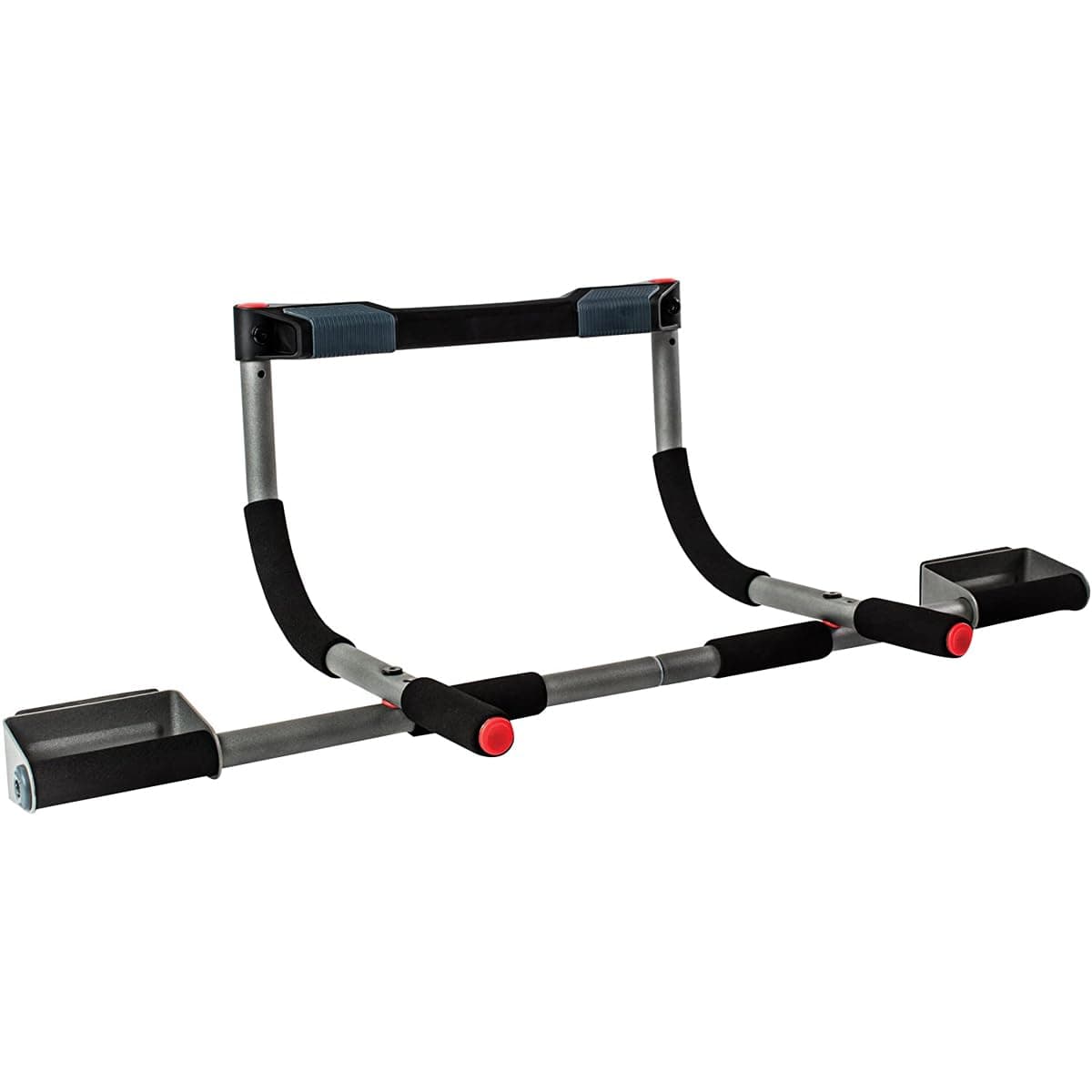
Here is the counterintuitive part. The Perfect Fitness Multi-Gym costs roughly 1.8 times the Iron Gym and lands on the identical 4.5 rating from 3,985 ratings. Nearly double the outlay, same satisfaction score, one sixth the evidence base. If you can explain what the premium buys in outcome terms, you know more than the listings do.
Where it falls short

The published data gives no weight capacity. Not on Iron Gym, not on any of the four. For a product whose entire job is suspending a human, that is the most important missing number in this whole comparison, and buyers heavier than roughly 200 pounds should treat the omission as a reason to check the packaging before use rather than assume it is fine.
Door frame damage is the recurring theme in this design category, and no amount of foam padding changes the load path. If your trim is soft pine or your door casing is glued rather than nailed, the bar will find that out. This is not an Iron Gym defect. It is a doorway-bar defect, and Iron Gym is the most-bought example of it.
Headroom is a hard constraint nobody mentions. Mounted in a standard 80-inch frame, a tall user will be doing partial-range pull-ups with bent knees. Nothing in the specs fixes that.
No Prime eligibility, on any of the four. Shipping timelines are whatever the seller says they are.
And the floor-mode push-up and dip functions are, in our reading, the least convincing part of the pitch. A bar designed to wedge in a frame is not a parallette. It works. It is not why you buy this.
Who should skip it
Anyone who owns their home and plans to train seriously. Buy a wall or ceiling mount, bolt it into studs, and stop worrying about load vectors. A screwed mount at a similar price beats every doorway bar in this set on rigidity, and the only thing you give up is portability you probably do not need.
Skip it if you weigh enough to want a published capacity figure, since none of these four give you one. Skip it if you are tall, because of headroom. Skip it if your doorways have decorative or crown-style casing, because the flat bearing surface these designs assume will not be there.
And skip it if you want dips more than pull-ups. That is a different piece of equipment.
The alternatives
JFIT Deluxe Multi Exercise Doorway Pull-Up Bar, 40-inch. Second cheapest of the four, 4.5 from 2,645 ratings, and the one feature it leads with is comfort grips. If the grip diameter and padding on the Iron Gym is what bothers you, this is the sideways move. Same score, one tenth the review base.
Perfect Fitness Multi-Gym Doorway Pull Up Bar. The premium option here, roughly 1.8 times the entry model, 4.5 from 3,985 ratings. It sells itself as a portable gym system rather than a bar, so the case for it is breadth of movements, not a better pull-up. We are not convinced the price gap is earned on the data available.
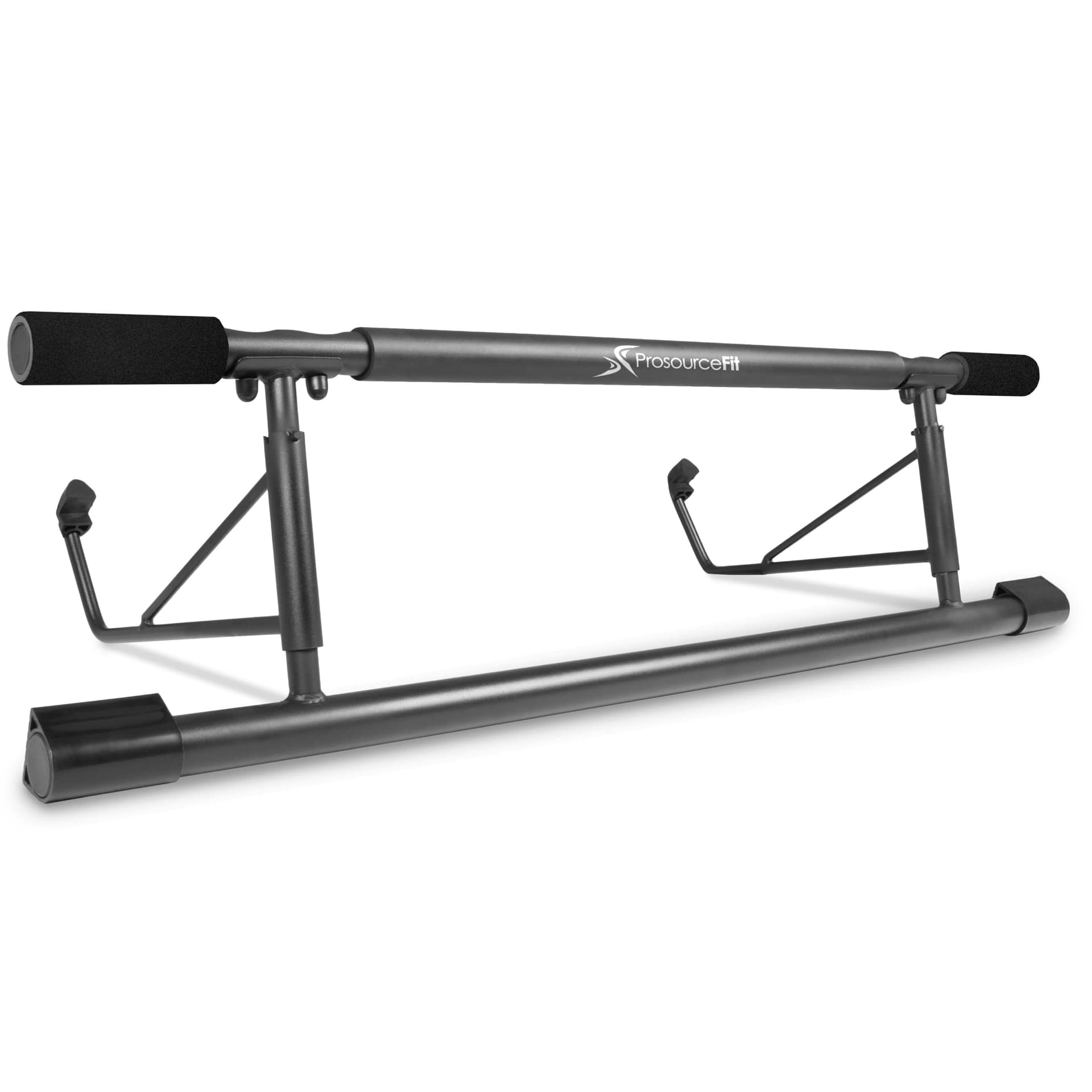
ProsourceFit Foldable Pull Up Bar. Highest score in the group at 4.6, from only 220 ratings, and the foldable design is the genuine differentiator for anyone storing it in a closet between sessions. Early sample, so treat the score as provisional.
Verdict
Our Rating: 4.4/5
The Iron Gym is the cheapest of the four and carries a review base the rest of the category cannot approach, which makes it the default recommendation among pull up bars for home use almost by elimination. It loses marks here for the missing weight capacity in the published specs and for a product name that promises more than a doorway-mounted bar can structurally deliver. If you rent, if you train two or three times a week, and if your door casing is ordinary, buy it and move on. If you own studs and a drill, this is the wrong aisle. For more home-training gear we have looked at the same way, see our foam roller comparison.